

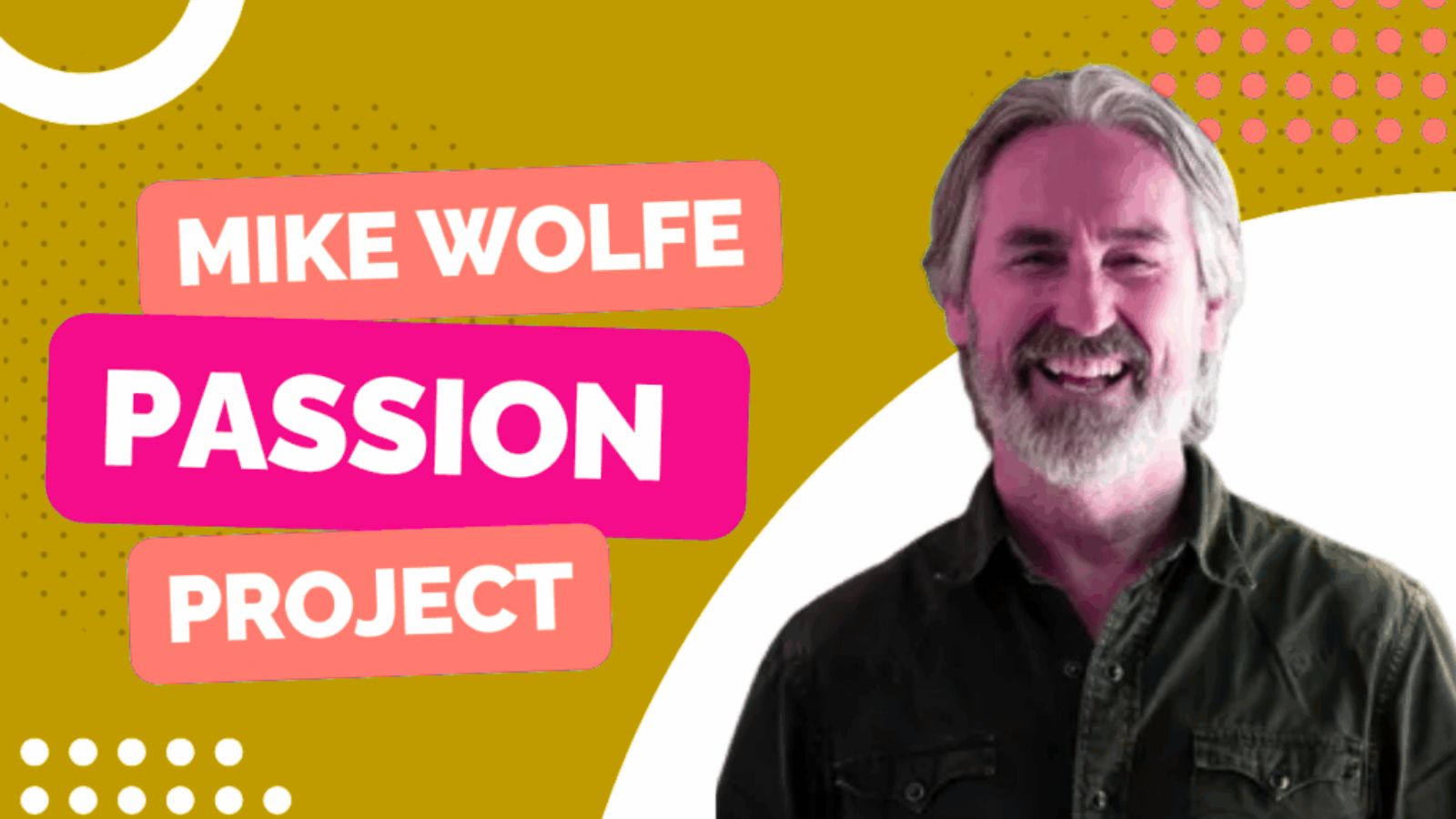
Mike Wolfe, best known as the charismatic creator and star of American Pickers, has always had an eye for discovering forgotten treasures and restoring them to their former glory. But recently, he’s taken his passion for preservation to an entirely new level. Wolfe has shifted focus from the open road to a single, deeply personal project—a dilapidated historic gas station in downtown Columbia, Tennessee.
What might seem like a simple real estate renovation is, in truth, much more. It’s a reflection of Wolfe’s lifelong commitment to storytelling, community, and cultural heritage. This endeavor isn’t about profit or fame—it’s about revival, authenticity, and giving back to a town that mirrors the small-town America he has celebrated for decades.
1. From Picking the Past to Preserving It
For years, audiences have watched Mike Wolfe travel across the backroads of America in American Pickers, uncovering relics of the past and breathing new life into forgotten artifacts. The thrill of discovery and the art of restoration have always been at the heart of his work.
Yet, this time, Wolfe’s mission is more grounded—literally. Instead of moving from one find to another, he’s investing his energy into one fixed location: a weathered gas station that once stood as a local hub in Columbia’s early 20th-century landscape.
Where others might see peeling paint and broken windows, Wolfe sees stories waiting to be retold. His goal isn’t merely to restore the structure, but to revitalize the spirit of the neighborhood around it.
2. Why Columbia, Tennessee?
Columbia, often described as one of Tennessee’s hidden gems, has become a focal point for small-town renewal. Over the years, Wolfe has spoken passionately about his admiration for the town’s history, its people, and its potential.
He has made Columbia his home base—opening stores, restoring properties, and collaborating with local businesses. His latest passion project, the gas station, is a natural extension of this ongoing relationship.
“Columbia reminds me of the towns I fell in love with while picking,” Wolfe once remarked. “There’s history on every corner, and people who care about keeping that history alive.”
For Wolfe, Columbia isn’t just a location—it’s a living museum of Americana, and he’s determined to make it thrive again.
3. The Gas Station: More Than Just Bricks and Mortar
On the surface, the project is about refurbishing an old gas station. But at its core, it’s about restoring a sense of place.
Wolfe has long believed that old buildings are the physical embodiment of stories, and preserving them keeps those stories alive for future generations. The gas station, though small, once represented community connection—a place where people gathered, shared news, and formed bonds.
By saving it from decay, Wolfe is not only preserving local history but also rekindling a sense of belonging that so many small towns have lost in the age of rapid urbanization.
He envisions the space as a multi-use community hub—perhaps a local café, event space, or workshop venue—where people can experience the intersection of history and modern creativity.
4. Beyond Preservation: A Philosophy of Revival
What sets Wolfe apart from many restorers is his deeper philosophy. He doesn’t just want to maintain old buildings—he wants to infuse them with new life and purpose.
In interviews, Wolfe has spoken about how America’s smaller towns are “time capsules of the nation’s soul.” Too often, these communities suffer as economic growth shifts toward urban centers. By reviving their old structures, Wolfe believes it’s possible to reignite economic and cultural vitality.
The gas station project embodies this belief perfectly. It’s not a flip for profit, nor a vanity project—it’s a statement of hope. It says that what’s old still has value, and that beauty exists in imperfection and endurance.
5. The Craftsmanship Behind the Project
Restoration, for Wolfe, is as much about craftsmanship as it is about philosophy. He’s known for his meticulous approach to detail—preserving as much of the original character of a structure as possible.
In the gas station project, that means using reclaimed materials, restoring signage, and respecting the original architectural integrity. Every bolt, beam, and brick has a story, and Wolfe is intent on ensuring those stories remain visible.
His approach is both historically sensitive and creatively adaptive—combining authenticity with innovation. It’s about finding a balance between preservation and progress.
6. Community as the Heartbeat
Perhaps the most powerful aspect of Wolfe’s project is its focus on community revival. For him, restoration isn’t complete until it benefits the people who live nearby.
Wolfe’s work in Columbia has already sparked interest in local preservation efforts. His projects inspire residents and newcomers alike to see potential where others see decay. By transforming neglected properties into points of pride, he helps fuel tourism, support local artisans, and strengthen community identity.
The gas station project, in particular, has the potential to serve as a symbol of renewal—a reminder that even the most forgotten corners of a town can be reborn with care and creativity.
7. A Passion That Transcends Television
While American Pickers introduced Wolfe to a global audience, this project offers a glimpse into the man behind the camera. Away from the spotlight, Wolfe is a preservationist at heart, driven not by ratings or recognition, but by love for America’s cultural landscape.
This side of him—the one dedicated to hands-on revitalization and grassroots community building—is often overshadowed by his television persona. Yet it’s precisely this quieter, more personal work that defines his legacy.
In the gas station restoration, we see Wolfe’s evolution: from a picker of things to a reviver of places, from collecting artifacts to nurturing connections.
8. The Broader Impact: Setting a New Standard for Preservation
Wolfe’s project in Columbia stands as a model for how historical preservation can drive community renewal. It challenges the notion that progress requires demolition and new construction. Instead, it shows how adaptive reuse—transforming old spaces for new purposes—can fuel economic growth while keeping history intact.
Communities across America face similar challenges: declining main streets, neglected heritage buildings, and fading small-town culture. Wolfe’s work demonstrates that with vision, respect for the past, and local collaboration, revival is possible anywhere.
Conclusion
Mike Wolfe’s passion project in Columbia, Tennessee, is far more than a simple renovation. It’s a living expression of his belief that the past is not something to discard, but something to build upon.
