

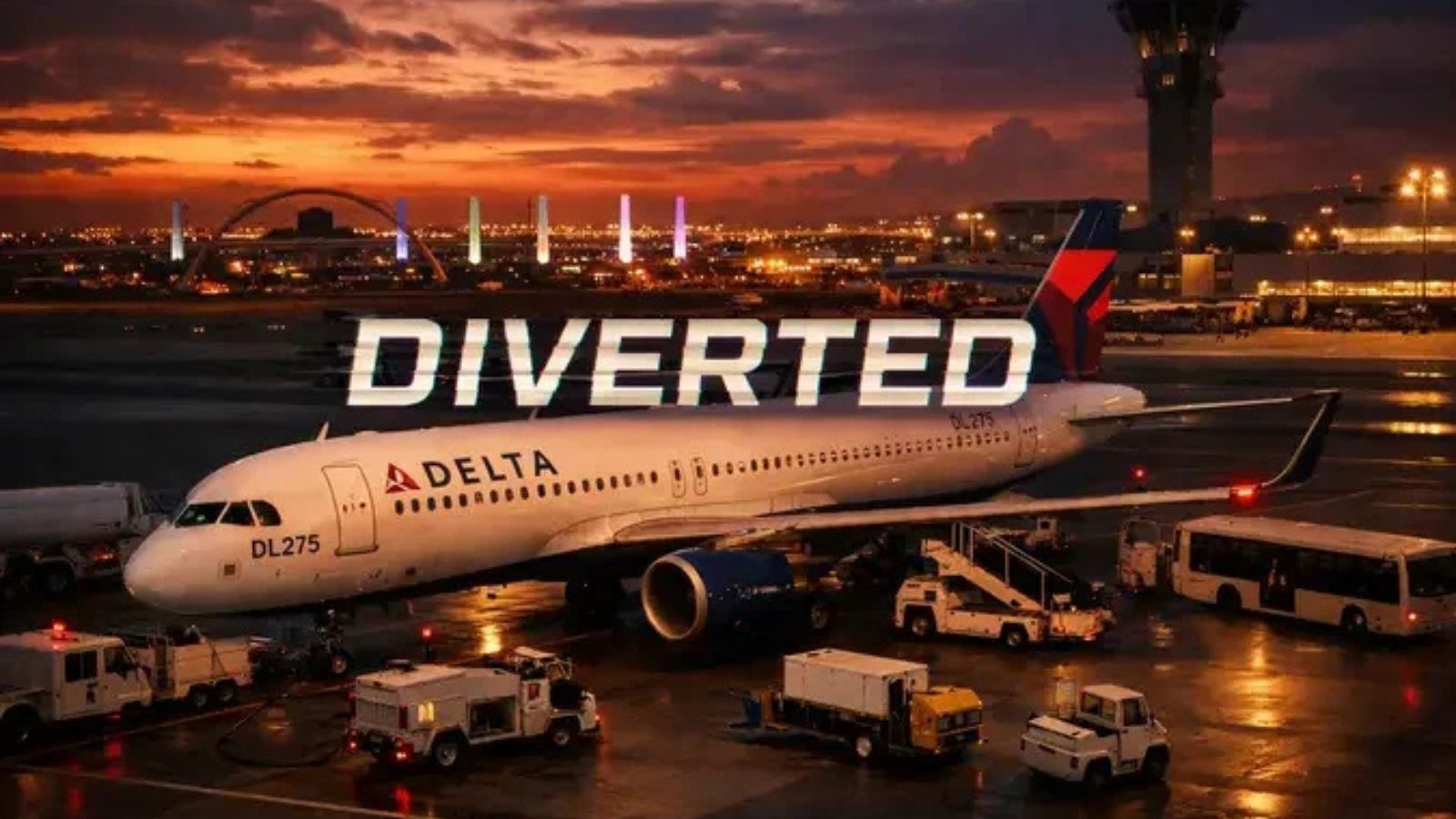
Delta Air Lines is known for operating some of the busiest international routes across the globe. Among them, Delta Flight DL275 stands out as a major long-haul service connecting Asia and the United States. However, a recent incident involving this flight drew attention when the aircraft was unexpectedly diverted to Los Angeles International Airport (LAX) while cruising normally at high altitude. The diversion created curiosity, concern, and many questions from travelers and aviation followers alike.
This article provides a detailed, 1000-word breakdown of what happened, why the diversion occurred, the typical reasons behind mid-air rerouting, and what passengers can expect during such events.
Understanding Delta Flight DL275
Delta’s DL275 is generally scheduled to operate between a key Asian hub—often cities such as Tokyo, Seoul, or Manila—and major U.S. destinations. These flights are long-haul operations that rely on wide-body aircraft such as the Airbus A350, Boeing 777, or Boeing 767 depending on the specific route and schedule.
These aircraft are equipped for ultra-long international journeys, carrying hundreds of passengers, cargo, and offering advanced navigation and communication systems. For a flight of this scale, safety protocols are extremely strict, and any deviation from the scheduled route is taken seriously.
The Incident: DL275 Diverts to LAX
According to available information, Delta Flight DL275 was cruising normally at high altitude when the pilots made the decision to divert the aircraft. Diversions can occur for several reasons, but the key detail is that the aircraft was not experiencing erratic behavior or sudden altitude changes before the decision.
The aircraft landed safely at Los Angeles International Airport (LAX), one of the largest and best-equipped airports in the United States. LAX is frequently used as a diversion point for Pacific flights because of its long runways, ample emergency response capabilities, and ability to accommodate large international aircraft.
Why LAX?
Several reasons make LAX a suitable diversion airport:
- It is a major international hub with customs and immigration facilities.
- LAX can accommodate wide-body aircraft with ease.
- It has specialized maintenance teams available 24/7.
- It provides hotels and ground transport options for stranded or rebooked passengers.
- Its location makes it ideal for Pacific flights that need to divert before reaching their final U.S. destination.
Possible Reasons Behind the Diversion
While Delta has not publicly shared every detail regarding the reason, most long-haul diversions fall into a few categories. Below are the most common causes of emergency or precautionary diversions, and one or more may have applied to DL275:
1. Medical Emergency Onboard
Medical emergencies are among the top reasons for mid-air diversions. With hundreds of people on board, chances of unexpected medical events increase. Pilots typically divert to the nearest major airport where the passenger can receive immediate medical attention.
If DL275 had a passenger suffering from a severe illness, cardiac issue, or other urgent conditions, diverting to LAX would have been the safest decision.
2. Mechanical or Technical Issues
Even though modern aircraft undergo rigorous inspections, issues can arise mid-flight, such as:
- Engine irregularities
- Sensor malfunctions
- Pressurization warnings
- Fuel system anomalies
- Electrical failures
Most technical issues do not pose immediate danger, but airline safety teams adopt a “better safe than sorry” policy. A diversion to LAX allows maintenance teams to inspect the aircraft more thoroughly before allowing it to continue or dispatch a replacement aircraft.
3. Weather Changes Along the Route
International flights cover thousands of miles and cross multiple weather systems. Sometimes storms, turbulence, volcanic ash, or jet stream complications necessitate diversions.
LAX is often used when flights from Asia cannot safely continue toward their original destination because of:
- Severe turbulence
- Fog
- Snowstorms
- High winds
- Thunderstorm clusters
4. Passenger Misconduct or Security Concerns
In rare cases, diversions occur due to unruly passengers, violent behavior, or potential security threats onboard. In such cases, the crew may decide to land at the nearest airport capable of handling law enforcement intervention.
LAX, equipped with federal security agencies, is a prime location for such situations.
5. Crew Duty Time Limit Reaching
Flight crews are regulated by strict FAA duty time limits. If extended delays earlier in the flight caused the pilots to approach their legal limit, the airline may divert to another airport to switch crews. This ensures the safety and compliance of long-haul operations.
What Happens After a Diversion?
When a flight diverts, several procedures follow:
1. The Aircraft Lands Safely
Upon touchdown, the plane is directed to a remote or standard gate, depending on the situation. Medical teams, engineers, or security personnel may immediately board.
2. Passengers Receive Updates
Airlines typically issue announcements and may distribute:
- Hotel vouchers
- Meal vouchers
- Rebooking options
- Transportation instructions
3. Aircraft Inspection or Passenger Assistance
If mechanical, engineers inspect or repair the aircraft.
If medical, paramedics attend to the patient.
If security-related, law enforcement handles the situation.
4. The Flight May Continue or Be Rescheduled
Sometimes the delay is brief, lasting only a few hours.
Other times, the flight is canceled, and passengers are rebooked on the next available service.
How Delta Handles Diversions
Delta Air Lines has a strong reputation for responsible handling of unexpected events. Their procedures focus on:
- Passenger comfort
- Transparent communication
- Safety-first decision making
- Quick rebooking and compensation where applicable
Delta’s support teams usually provide assistance through on-ground staff, the Delta mobile app, or customer service centers.
Passenger Experience During DL275’s Diversion
While exact reports by passengers vary, a typical experience in such cases involves:
- Calm communication from the pilot
- Professional handling by cabin crew
- Safe approach and landing
- Clear instructions after landing
- Coordination for rebooking or onward travel
Most diversions, while inconvenient, prioritize safety above everything else.
Conclusion
The diversion of Delta Flight DL275 to LAX highlights the complexities involved in long-distance international travel. Whether the cause was a medical emergency, technical issue, weather challenge, or another operational concern, the decision reflected Delta’s commitment to ensuring the safety of everyone on board.
While diversions may cause delays and disruptions, they are essential safety measures that prevent potential dangers. With its world-class facilities and strategic Pacific location, Los Angeles International Airport (LAX) is a preferred and highly dependable diversion airport for flights like DL275.
Passengers can take comfort knowing that such decisions are guided by expert pilots, advanced aircraft systems, and strict aviation safety standards.
FAQs About Delta Flight DL275 Diversion
1. Why was Delta Flight DL275 diverted to LAX?
The exact reason has not been publicly confirmed, but diversions usually occur due to medical emergencies, mechanical issues, weather changes, or operational concerns.
2. Was anyone injured during the flight?
There were no reports of injuries. Diversions are typically precautionary to maintain safety.
3. Did passengers reach their final destination?
Yes. Passengers are typically rebooked or transported on a later Delta flight after the diversion.
4. How common are flight diversions?
Diversions are rare but not unusual for long-haul flights. Airlines divert only when necessary for safety or regulatory reasons.
5. Can passengers claim compensation for diversions?
It depends on the cause. If the diversion was due to weather or medical emergencies, compensation may not apply. If operational issues were responsible, passengers may receive vouchers or accommodations.
6. Is LAX a common diversion airport for Pacific flights?
Yes. LAX is one of the most frequently used diversion airports due to its size, facilities, and strategic location on the West Coast.
