

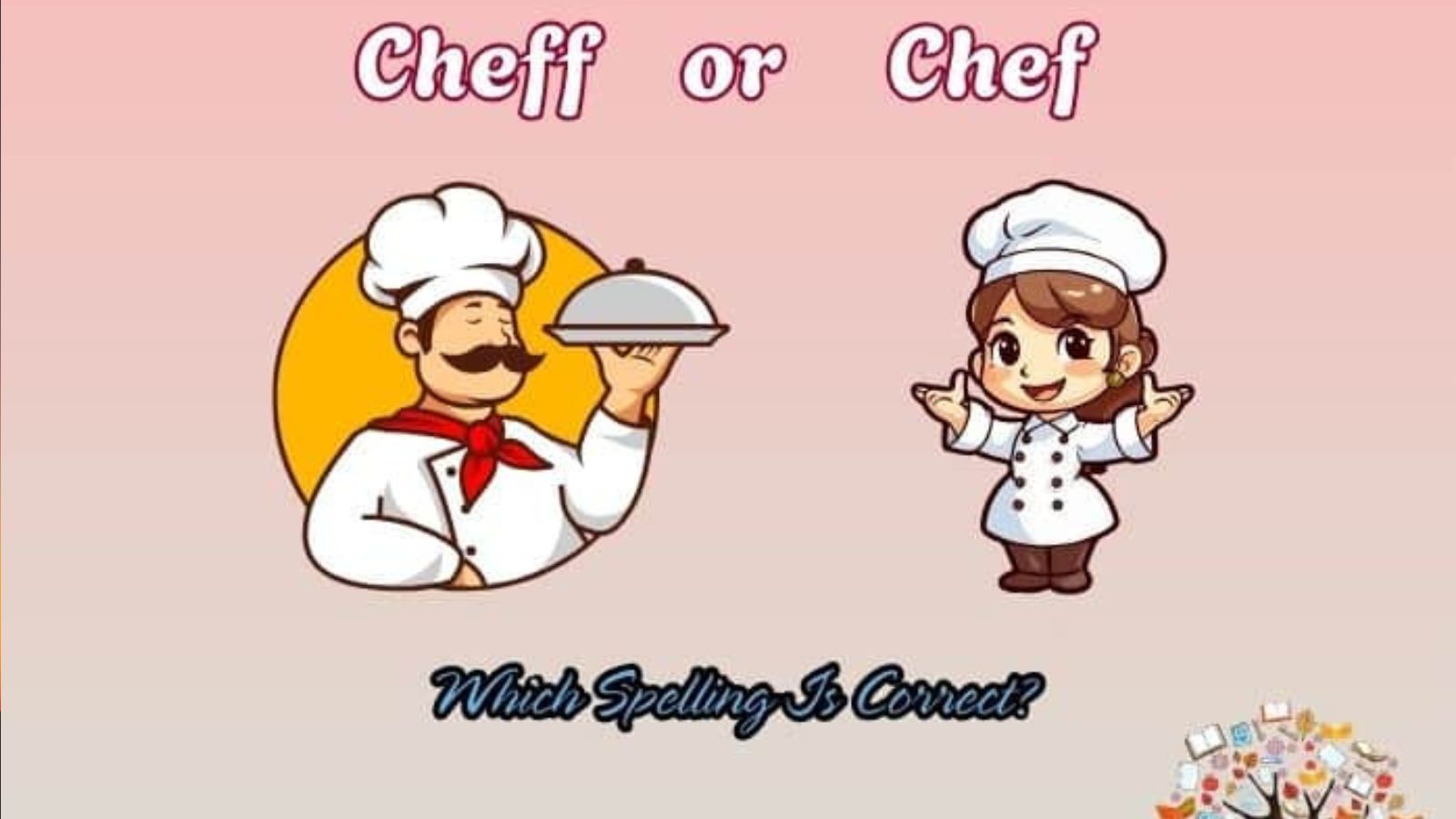
The English language often presents challenges when words sound the same but differ in spelling and meaning. One common example found in everyday writing and conversation is the confusion between “chef” and “cheff.” Because both words sound almost identical when spoken, many people mistakenly assume that “cheff” is an acceptable alternative spelling. In reality, only “chef” is correct, while “cheff” is a spelling error.
Understanding this distinction is more than a grammar lesson. The word chef represents one of the most respected and skilled professions in the culinary world. Knowing its correct spelling, usage, and cultural significance is essential for anyone involved in cooking, dining, food writing, or gastronomy-related discussions. Clarifying this difference improves communication and shows genuine respect for the profession.
Why Do People Confuse “Chef” and “Cheff”?
The primary reason for confusion between chef and cheff is phonetic similarity. In spoken English, the word “chef” is pronounced with a strong “f” sound at the end, which leads some people to assume it should be spelled with two “f” letters.
English contains many words where doubling consonants changes meaning or tense, so the assumption feels natural. However, spelling rules do not always align neatly with pronunciation, especially when words are borrowed from other languages.
The Origin of the Word “Chef”
The word chef comes from the French term chef, which means “chief” or “leader.” Historically, a chef was the head of a kitchen, responsible for managing staff, creating menus, and maintaining quality standards. This origin reflects the authority and leadership role that chefs hold in professional kitchens even today.
Because the word comes directly from French, English retained its original spelling rather than modifying it to fit English phonetic patterns. This is why the spelling chef remains unchanged and why “cheff” has no linguistic or historical basis.
Is “Cheff” Ever Correct?
In standard English, cheff is not a correct word. It does not appear in dictionaries as a legitimate noun or alternative spelling of chef. When used, it is simply considered a misspelling.
In some informal contexts, people may use “cheff” jokingly or stylistically, but it has no accepted grammatical or professional meaning. In formal writing, professional communication, and culinary contexts, using “cheff” can undermine credibility.
Correct Usage of the Word “Chef”
The word chef refers to a trained professional who specializes in cooking and food preparation, usually within a restaurant, hotel, or professional kitchen environment. It also implies a level of expertise, leadership, and creativity.
Examples of correct usage include:
She trained as a chef in a five-star hotel.
The chef designed a seasonal menu using local ingredients.
He dreams of becoming a professional chef one day.
In all cases, the spelling remains the same regardless of context.
Cultural Significance of the Chef Profession
The role of a chef goes far beyond simply preparing food. Chefs are artists, leaders, and innovators who shape culinary culture across the world. From fine dining restaurants to street food kitchens, chefs influence how people experience flavor, tradition, and creativity.
In many cultures, the title “chef” is earned through years of training, discipline, and dedication. Using the correct spelling honors this effort and recognizes the profession’s prestige.
Chef vs Cook: Understanding the Difference
Another reason correct usage matters is the distinction between a chef and a cook. While both work with food, a chef typically has formal training and holds a leadership position in the kitchen. A cook may prepare food under the guidance of a chef but does not usually carry the same responsibilities.
Spelling “chef” correctly reinforces this distinction and ensures accurate communication, especially in professional or educational settings.
Why Correct Spelling Shows Respect
Language reflects attitude. When someone spells “chef” incorrectly as “cheff,” it may seem minor, but it can appear careless, especially in culinary discussions, menus, blogs, or professional correspondence.
Correct spelling demonstrates respect for:
The culinary profession
The cultural history of gastronomy
The expertise and training of chefs
For anyone involved in cooking, dining, food journalism, or hospitality, accuracy matters.
Common Situations Where the Error Occurs
The confusion between chef and cheff commonly appears in:
Social media posts about food
Restaurant reviews and blogs
Student assignments related to culinary arts
Casual conversations and text messages
While informal settings allow for flexibility, repeated misspellings can reduce clarity and professionalism over time.
The Role of Language in Gastronomy
Food is a universal language, but the words we use to describe it still matter. Gastronomy combines culture, history, technique, and storytelling. Using accurate terminology, including correct spellings, helps preserve the integrity of culinary traditions.
Just as chefs take care with ingredients and presentation, writers and speakers should take care with language.
Learning Through Awareness
Once people understand that “chef” comes from French and has a specific historical meaning, the confusion with “cheff” usually disappears. Awareness is often all that is needed to correct common mistakes.
By learning the background of words, users become more confident in their communication and more connected to the culture behind the language.
Modern Communication and Spelling Accuracy
In the digital age, where writing happens quickly across platforms, spelling errors are easy to make. However, searchable content, professional profiles, and published material benefit greatly from accuracy.
Using “chef” correctly ensures clarity and maintains credibility, whether you are writing a recipe, reviewing a restaurant, or discussing culinary careers.
Conclusion
The confusion between chef and cheff arises mainly from phonetic misunderstanding, but the distinction is clear. Chef is the only correct spelling, rooted in French history and deeply connected to one of the most respected professions in the culinary world. “Cheff” is simply a misspelling with no official recognition.
